
"Listeners feel deceived when audio is synthetic."
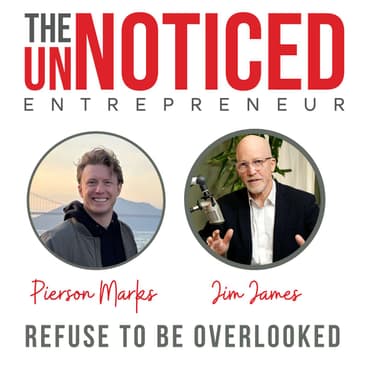
Join Jim James as he interviews Pierson Marks, co-founder of JellyPod, who shares insights on the challenges and opportunities in the AI podcasting space.
Jim asks Pierson if he's just helping people to make AI slop...or it is synthetic voice coming of age?
You may be surprised by the answers.
Discover how AI voice can empower those who may not feel comfortable recording their own voices, and learn about real-world use cases, including how educators and small business owners are leveraging this technology.
Chapters
00:00 The Rise of AI in Podcasting
04:43 Understanding the Human Connection in AI Voice
07:55 Use Cases for AI Voice in Education
13:31 Creating Podcasts with JellyPod
19:50 Voice Technology and Distribution in Podcasting
24:24 The Growth of Jellypod Studio
27:29 Harnessing AI for Development
31:42 The Entrepreneurial Journey
34:27 Understanding the Pricing Model
36:55 Success Stories and Use Cases
39:17 The Future of Voice Technology
41:18Advice for Young Entrepreneurs
Do you think that AI Voices are slop or that we're creating a whole new category of podcast cotent that is set to engage audiences, and liberate new creators?
Drop it in the comments!
Subscribe for weekly insights on the latest in podcasting and AI technology!
https://www.theunnoticedentrepreneur.com
Try Jellypod for free:
https://zurl.co/Jellypod_Unnoticed
#Podcasting #AI #JellyPod #podcast #ai #aipodcasts
Get vidIQ to grow your channel faster! 🚀
https://vidiq.com/TheUnNoticedEntr
Generate higher quality, higher converting leads
Riverside - Your online recording studio
The easiest way to record podcasts and videos in studio quality from anywhere. All from the browser.
Test before you invest - with PickFu
Run a poll and get in-depth feedback from real people in minutes. Coupon: THEUNNOTICEED
Disclaimer: This post contains affiliate links. If you make a purchase, I may receive a commission at no extra cost to you.
Subscribe to my free newsletter
https://www.theunnoticedentrepreneur.com/
The UnNoticed Entrepreneur is hosted & produced by Jim James.
Jim James (00:00)
Recent research by Edison suggested that the least popular application of AI in podcasting is voice. The audience don't mind AI show notes, they don't mind AI promotional or thumbnails, but what they really object to is voice. So why is my guest building a business based on AI voice podcasts? He's here to show and tell us why because
Personally, I've been using this platform and I think it's amazing. There are just two co-founders and they're producing an outstanding amount of work at an astounding quality. I want you to welcome Pierson Marks, who is the co-founder of a company called JellyPod and they are based in California in San Francisco. Pierson, welcome to the show.
Pierson Marks (00:50)
Thanks, Jim. great to be here.
Jim James (00:52)
I have that parasocial relationship with you because I've been listening to your live streams. I've been watching you and Bilal talking not only about JellyPod, but also the state of tech. It's amazing the depth and the range of expertise that you two have. So I see you as someone that is an innovator, but also an educator. And that's where I'm hoping you're going to take us today is why you're building a business to do with AI voice for podcasting when...
Edison suggests that's not a good move. We're going to talk about you as an entrepreneur, how you've been building this business, not that many years out of college and then working for some large IT companies. And we talked about some of the experience you've got as an entrepreneur. So, Pierson, first of all, why voice when everyone is saying AI voice is slop?
Pierson Marks (01:42)
No, it's a it's a great question. so voice, so generative media in general, I think, is a there's a knee jerk reaction against this sort of content, synthetic content, whatever you'd like to call it. and it's I think it's fair. I think when people think about art, they think about a human emotional connection to whatever.
The whatever it's a painting, it's a film, it's anything. And over the last many millennia, that's how it's always been. And now you have a new technology that comes out that kind of throws a wrench in sort of this personal connection you have. So podcasting is a very interesting space because, you know, it it started in a few decades ago, the iPod, it was broadcast.
It was iPod and broadcast. It came together as a podcast. And it was one of those forms that was very of media that was very novel at the time, before social media really existed. And you could actually hear individuals speak on topics, rant, banter, and it you felt this personal and human connection to those people that weren't traditional radio hosts or anything.
And it was really amazing back in the early 2000s to be able to do this. And over fast forward 26 years, now you have synthetic voice, generative audio and these things. And what's really interesting about this is that now it's coming to the place where you can't really tell between was this podcast or was this audio recorded by someone in a studio?
Or was this produced on a platform like Jellypod or using something like Eleven Labs? And I I believe strongly, like, you know, we'll probably get into this, but audio is something that's very human. And when you you feel deceived, and I think that's what listeners feel right right now. It's it's a deception of what's being said. can you trust it in a in an era of misinformation?
You know, now there's no person behind what's being said. But I think that's the wrong premise. And so the reason why we built Jelly Pod was not because we think that it's necessarily, hey, we need podcasts with AI. I don't believe that. I think we need more people out there sharing their voice and sharing their stories, even the people that aren't comfortable like we are behind a microphone with our face.
know, out in the world. There are a lot of stories, a lot of, you know, niche knowledge that will just never get out into the world because that person doesn't want to invest the time, can't invest the time, or is not comfortable in recording themselves. And so that's why AI voice is this huge opportunity because people are able to now create content in a format that they traditionally would never create in. And that format podcasting is amazing.
And we can go into why I think podcasting is amazing of a medium as well. But that's kind of high level there. Yeah.
Jim James (04:43)
Pierson, so it's interesting you use the word deception, that people feel deceived. And I was interested in this Edison research because it's saying people don't like AI and yet my daughters who are teenagers listen to AI generated content on YouTube. My wife who's Chinese listens to Chinese stories read plainly by an AI.
Pierson Marks (04:49)
Right.
Jim James (05:09)
And so it's almost like this suspension of disbelief, isn't it? That people have an issue with being deceived and yet actually many people have moved beyond that. And they're not thinking, well, it's not a human, I can't listen to it. So do you think that it's about this idea that it's me talking to you, but it's not really me talking to you? Or is it just that, you know, actually I don't mind if it's audio and I don't mind. I just don't want someone to pretend.
Pierson Marks (05:19)
Mm-hmm.
Jim James (05:38)
that it's them. Where do you see that distinction?
Pierson Marks (05:40)
Yeah.
You know, it's it's that's good question. I think it it's a little bit of both. I I think the latter where like you're pretending, I think that's where you kind of get into this weird space. But I can tell you firsthand that there are many big podcasts out there. I'm not gonna name who and I I can't because I'm not sure, but I'm fairly confident there's a
decent amount of big podcasts out there that use AI voice either fully or at least partially in their shows. And people just won't know. but I don't think people genuinely care. I think they just at the end of the day, people want something that sounds good, that they engage with, that they feel like it's not a waste of time. Cause you know, nobody cares if the they want to consume content that they like. And if it's produced via
A human behind a microphone, a human behind a computer, that the computer creates the audio. Doesn't matter as long as it's engaging, that the listener actually enjoys the content. AI slop comes around when it's low quality, inauthentic content. And that, of course, that is if it's bad, it's bad. Doesn't matter who was produced. It could be a bad human podcast too, you know?
Jim James (06:56)
And I think we're in an interesting space there because when we think about TV, animated movies, Toy Story, all the way back to Mickey Mouse, right? That was never a person. And the reason that question is so fundamentally important, Pierson, is because if humans were at odds with listening to something that's synthetic, Jelly Pod wouldn't have a future, right? It would be axiomatic that no one, if anyone found out.
Pierson Marks (07:02)
Mm-hmm. Right.
Toll.
Mm-hmm.
Jim James (07:25)
that it was synthetic, no one would listen. But actually what we're saying is people do listen, they do watch as long as it's good, which I think is brilliant. And having worked with JellyPod, the quality of what you produce with JellyPod, and we'll go into how that works in a moment, is astounding. So let's just then think, first of all, the premise is actually synthetic voice has a future. Let's just talk about some of the use cases.
Pierson Marks (07:32)
Yeah. All right.
Jim James (07:54)
that you've got because you referred to where some people don't have maybe the self-confidence all the time to record. But I know within JellyPod, you've got some users who have got some use cases that just make it super efficient to do what you're doing. So can we just talk about some of the use cases and then I'll ask you how it actually works, how JellyPod actually creates these amazing podcasts.
Pierson Marks (08:21)
Totally. Yeah. So in nine times out of ten, the content created on Jellypod is not in direct competition with long form podcast content like Joe Rogan, Allen, Andrew Huberman, any of those major podcasts. It's it's a different category in itself. So Jellypod, oftentimes we find success in the ten to twenty minute long, shorter podcast episodes. And on the platform, what we've seen that some users
Some of our most successful users are creating are one in the education space. So think about university professors, academics, researchers who spend most of their time focusing on research or, you know, the things that they love. But they have papers, they have students that need to consume that information. And so Jellypot is this awesome new way to take.
Content that's already being produced, whether that's lecture material or research papers, and convert that into podcasts where their students or their TAs or whoever can just read or can listen to versus read. so the academic and the education space is something where it just would never have been done in the first place. You know, it's not a replacement of something that's already being done. It's actually net new. And that's kind of where you see the market and the
the TAM growing in in terms of podcasting because that
Jim James (09:50)
Pierson, you've got a use case specifically, can you just tell us which university, which professor is using JellyPod? Let's give people the reality. It's not a theory, it is actually a use case. And that's why my dad was a professor and I can just imagine how useful it would have been for him to share his insights on podcasts rather than just at the lecture on a Thursday morning.
Pierson Marks (09:58)
Yeah.
Right.
Totally. So one of our case studies was with a professor, Steve Denunzio. He's a professor of logistics at the Ohio State university here in the United States. And he has a daily slash weekly podcast where he talks about all the latest news in logistics. So it's kind of what he calls flipping the the classroom.
So in addition to standard readings or lecture material, he'll also give a podcast, which is usually around ten minutes long, that just covers everything in logistic news. So he's an MBA professor and his students, MBA candidates, listen to his podcast once a week and it prepares them on the latest the news in the logistics world about what's going on there and
They don't have and so Steve actually takes the time to figure out what's relevant and he goes into a jellypod, pulls in some articles, does some research in the platform and produces this podcast for his students. And it's really been a success. He's actually had he has these he's created these characters and the students love the characters and the voices. He actually he reached out recently was like, Is there a way that we can do like a live podcast? So it's me and my AI host, and you know.
the technology's not there yet, but it's been really successful for him.
Jim James (11:32)
And this is liberating him. Is this professor, Denuncio, is he using his own voice, Pierson, or is he using one of the synthetic voices? Because that's a foundational strategy question, isn't it? Does he represent himself as doing the podcast or he's got another person doing it for him?
Pierson Marks (11:51)
Yeah. So he does a voice clone of his own voice and then he has his co-host, her name is Ellie, and yeah, and so they go back and forth and it's a clone of his voice and then a fully generative voice.
Jim James (12:08)
And I'm sharing on screen for anyone that wants to see this in video, the jellypod.com website. And it shows how you can use the synthetic voices and we'll come onto that in a minute with Pierson, or you can add your own. In fact, my experience with the JellyPod was to record my own voice and then to have a partner voice to do a podcast about Wiltshire.
And my use case was that there's so much news, but none of the local chamber members or counselors had the time to come on the microphone. But there's this kind of cascade of newsletters and Facebook and all these things. And it was very difficult to get into the studio, certainly not to coordinate two people. So this idea that you could have yourself plus a synthetic co-host.
Pierson Marks (12:57)
Right.
Jim James (13:03)
is really, really very clever, very powerful. Pierson, from a practical point of view, I'd love you to just share as well the different ways that someone like your professor or me are able to create either this single host or multi-host podcast, because I was also really impressed with how easy you make it for people to create that podcast.
Pierson Marks (13:06)
Totally.
Yeah. So we try to keep it as simple as possible. If you log into JellyPod, it looks very familiar if you've used anything like ChatGPT or Claude. so it's three steps to get a podcast live and hopefully you can get your first episode live within twenty minutes. That's our that's our goal. But so the first thing that if you want to have a fully like your own podcast is you create your hosts. So these hosts are characters, they have a a voice.
Obviously, a name and a backstory. So there's three components of a host that goes into that creation process: name, backstory, and voice. All three of them impact how they talk and how they chat in your podcast. So you create your hosts, whatever you want. Could be a voice clone of yourself or choose one of our voices in the library. Then you create your podcast series. So your podcast series is the umbrella.
That contains all your individual episodes. So this is where you give it a name, what the podcast is about. So you have your series, you have your hosts, and now you create your episode. So when you create a new episode, you pretty much have a chat GPT like box, and you throw in documents, websites, links, blog posts, or a prompt into that little area. You say, Hey, I just gave you a blog article about
the latest week in technology, focus on these points. I want it to only be seven minutes long, and you click go. And that's kind of you kick off that process and you can go from there.
Jim James (15:04)
And I think, Piers, and there are a couple of aspects that I really enjoyed. One was that you can give it the material or you can give it the script and it will generate the script for you to review before it then renders the audio, if that's the right terminology, right? Yeah. So it gave me a lot of control as well. So I can either do it at speed or finesse the show.
Pierson Marks (15:24)
Tolloi.
Right. Hundred absolutely. That's the that's the goal. We want to help you get to eighty, ninety percent of the way there as quickly as possible. And that you come in as the editor in chief of your show to make sure everything sounds exactly correct and right. So Jellypod will create that script for you, but you can always edit that script. we'll create the audio for you and yeah.
Jim James (15:56)
And then there was a, I think an update or a development, whereas once upon a time one would enter the documents, but then you've added in the ability for JellyPod to take a prompt and do the deep research itself, I think, right? Which, want to share that? Because I think that one of things that's really impressed me about you and Bilal is that you've really understood the workflow of someone like me who is trying to create the podcast. So just explain the prompt based.
which is where the JellyPot is doing the research off platform.
Pierson Marks (16:34)
Right. So if you let's say let's give an example. you can go into a prompt and you type a prompt in Jellypod, say, Hey, create a six minute podcast about the latest news in say San Francisco. And Jellypod will then say, cool, like let me go search the internet.
and find what is the latest news. So it'll go out onto the internet, it'll go pull in some sources, find some local newspapers, maybe some some videos on YouTube. It'll pull in all that information. It's like, hey, now I have enough context to actually create an episode about the latest news in San Francisco. And then I can generate the script. So it will actually intelligently decide if it needs to pull in other context from the internet to make your podcast better.
Jim James (17:23)
And I think that the final thing that you've done or final feature that I'd love to raise is that of automation because six months ago, I was starting to engage with N8N and JellyPod and was thinking each week I'm going back into JellyPod to do the research manually, putting it into JellyPod, which created an extra work step for me.
Pierson Marks (17:35)
Mm-hmm.
Jim James (17:50)
Tell us, Pierson, how have you now made it so that JellyPod really can become part of someone's workflow without creating a workload for them?
Pierson Marks (18:01)
absolutely. And I'm so, so bullish on this idea of I have I want to do something and let me set it up once and mo it'll just continue working. You know, that's what as a manager or a founder of anything, like you want to tell your employees or say, Hey, I want this done every day and the idea comes from you, but the execution comes from either your employees or a software system.
So we took that same concept into Jellypod, where we added this feature called automations. And so now Jellypod gives users the ability to create a recurring podcast that triggers on some schedule. So if you want to podcast every morning at 9 a.m. talking about the the FIFA World Cup, you know, it's coming up. You can do that. And so you go into Jellypod, you say, hey.
You're creating a podcast every morning at 9 a.m. Talk about all the highlights of the latest matches, any upcoming games of the next day or so, highlights, horrible referee calls, everything. And then click create. And then now every morning at 9 a.m., Jellypud will do that research. Go search the internet, create the script, create the audio for you, and then publish it to your podcast channel automatically or
set it as a draft where you can come in and make sure everything's perfect and tweak it and then publish it.
Jim James (19:27)
And again, Pierce, I really like how you've understood the break points, which enable a reduction in workload, but with control for quality, which is so important. Pierson, once the podcast has been made, the audio has been made. Well, let's just talk about first of all, the voices. Is that something that JellyPod?
Pierson Marks (19:48)
Mm-hmm.
Jim James (19:49)
is fabricating its own voices or are you going out to the other players because that must be a huge amount of work. And I know there's you and Benal together, but you do colossal amount of work, but tell me a little bit about where the voices come from because at the end of the day, it's as close to authentic as possible. That's kind of the minimum viable product, isn't it, for audio?
Pierson Marks (20:08)
Right.
yeah, absolutely. So we partner with and work with some of the top model labs, some which you may know, some which you may not, like Eleven Labs and and Gemini to deliver to our users the best text of speech models available. and so we don't do any of the audio training ourselves. We let the pros handle that, the ones that have raised you know, bazillion dollars.
To train these high quality models. And we focus on the higher level abstraction and allowing our users to get the most out of those models. So, someone like Eleven Labs, they have a lot of different business units, they do voice agents, they do studio grade stuff. you can do anything over in that platform. And what we're doing is just very focused on on podcasting and making that flow the easiest and the best in the world.
while using eleven labs voices, while using Gemini voices. So a lot of people ask, like, hey, like I could do the same thing in eleven labs. And I mean, absolutely. And that's why we work with them. but we just want to create a better experience for podcasting specifically.
Jim James (21:18)
Yeah. And I think that's where I was so impressed with what you've done because people say, you can create your own 11 Labs clone voice, which I did. And I then connected it into JellyPod. But what you've really done, and I keep coming back to this, is you've understood the workflow of podcasting so well. And you're really unique in that because I've tried some of the other platforms that we won't have to talk about once they are, but
Pierson Marks (21:25)
Right.
Jim James (21:40)
I thought you've really understood the workflow best as opposed to being an audio post-production platform for TVCs or radio. You've really made it a podcast production platform. So once one has done the origination of the script, the rendering, let's just talk about the next part, which is distribution, Pierson. How is the show distributed? Because of course that's, you know, the next part is whether it's to
Pierson Marks (22:01)
Mm-hmm.
Jim James (22:10)
players, the platforms, explain to me how the workflow goes there.
Pierson Marks (22:15)
Yeah. So JellyPod has built-in hosting and distribution. So we make it easy for you to get your show onto the internet with your own website. So every podcast has its own website that you can send to your friends and family that they can listen to on the website. It also comes with an RSS feed. So because we give you an RSS feed, we make it easy to hook into Spotify, Apple Podcasts.
Overcast or any of those other distribution platforms like YouTube as well. So you just can go and set up once, hey, here's my podcasts feed. And then every episode that you create, you click publish, and it'll just appear on Spotify, on Apple Podcasts, without you having to manually upload. So that was also key for us to make it easy to publish.
Jim James (23:05)
what about the video side because, you know, we have to put content onto YouTube because it's the world's second largest search engine, but also now it's eclipsing Apple and Spotify in terms of podcast listening. So tell us about how JellyPod serves content into YouTube, which of course needs to be a different format.
Pierson Marks (23:19)
Mm-hmm.
Yeah, so YouTube is distinct because you can't serve video through an RSS feed. So today, if you're looking to get your podcast onto YouTube from Jellypod, you'd download the video and you'd upload it to your channel. so you make it easy to download the video. And the video is pretty much we have a few different templates that you can use for your your podcast video, but
it's not as seamless as we'd like it to be with a one click button, but it's two click. It's a download and then an upload. So we're getting there.
Jim James (23:56)
Okay. And there's only a few players, people like Descript have managed to sort that file conversion and distribution out. Right. But I've no doubt you'll get there. it's, but I think also with JellyPod, we're getting the show notes and the chapter markers anyway, aren't we? So it's, it's, there's not a lot of work. It's a little bit of manual download and upload. Okay. Pierson, you and Bilal have built a system now.
Pierson Marks (24:05)
Right.
Mm-hmm.
Right. Right.
Jim James (24:23)
Tell us a little bit about the history and also where you're at now in terms of number of users or number of hours or number of shows, whichever you're comfortable to share.
Pierson Marks (24:35)
Yeah, totally. So we launched the Jellypod Studio in 2024. So it's been about a year and a half now. Balal joined the team about a year ago. And since our launch, we've had over 75,000 users join the platform. We have about we have over a hundred thousand distinct podcasts created on the platform.
which is really cool. That's hundreds of thousands of minutes of audio. and so it's growing and yeah, it's been amazing.
Jim James (25:05)
Yeah,
that's an insane number because I watch YouTube and I've been kind of trying to peek behind the curtains and see what, you know, where's the organization? And I just see it's you and Belal. And I've popped up a few times on YouTube saying, hey guys, know, so where's the development and is it, it's happening between you and Belal, but tell me how are you accomplishing such scale of development with such a a small team?
Pierson Marks (25:34)
Yeah, I mean, it's we're in a amazing time right now. I've been a software engineer or I've been a programmer since I was a kid. I learned to code in elementary school. I studied computer science in undergrad. and so I've been very familiar with computers a long time, but it's only been the last two years or even less, where essentially what one person can do is almost in the order of what a hundred people can do.
And it's sounds absurd. but and and people will disagree, but software is one of those things that you know AI can write a can produce a lot of language. You know, they're large language models, and code is language and it's structured language. They're very, very good at doing coding. and so now we are able to work in a way that
It's never been possible ever in humanity where you can almost have an infinite number of you know employees, but these employees are agents or AIs that are writing code for us. So as long as you have clarity in terms of the vision of what we want to create, we're actually able to parallelize work across these these AIs that are writing the code for us.
And we can get a lot of stuff done. And it's very, very cool. and this has only been a recent phenomenon in the last maybe even six months where it's been actually possible to do this.
Jim James (27:05)
Really, that's interesting. now you're able to say agents operating in parallel to deliver, presumably, I mean, we used to call it object oriented programming, right? Or you just have little sort of kernels of code that would accomplish a certain function and then you'd put them all together at the end. For someone like me, that's obviously not even a novice. I wouldn't even credit myself with being a novice.
Pierson Marks (27:10)
Mm-hmm.
Jim James (27:28)
What kind of technology, for those of us that are not particularly abreast of it, when you say agents, is that like a chat GPT going off and building something and then coming back? Or does it like you throw a boomerang out and it's coming back? How does that work from a practical point of view?
Pierson Marks (27:46)
Yeah, so the two major AI players everybody knows, OpenAI and Anthropic, they both have their own coding agents. And when I say the term agent, you can consider ChatGPT as an agent, essentially. Agent is just this very fuzzy term of just a chatbot that can perform actions, essentially. ChatGPT is more user-friendly, or Claude is very user-friendly. And recently it's been able to hook into tools like
Connect your Gmail or search the internet and do things where it's not just answer response. It's more of, hey, I asked you to do something and think a little bit and I'll go search the internet or look at your emails and do stuff. So that's on the far, like that's on like the most user-friendly side, and that's what most people are familiar with. And on the most developer, on the most advanced side, you have these fully autonomous, long running agents.
Jim James (28:26)
Yeah.
Pierson Marks (28:41)
That you can give them a long prompt that say, Hey, build me a billion dollar company and make no mistakes. And Claude or Chat GPT and or Codex, I guess, they will go out and they'll maybe ask you some questions like, Hey, you want to build a billion-dollar company, like in what area? What should we focus on? Blah, blah, blah. I'll ask you some questions and then it will go out. And it will be in usually in the cloud or on your local machine. It'll just start writing code.
And I'll start writing code, testing the code, deploying the code. And these sort of agents can run from five minutes, thirty minutes, to multiple hours, just depending on the complexity of the task. And hopefully you've specified what you want it to accomplish really clean clearly, because if you don't, then it'll go off the rails. Just like if you're a bad communicator to an employee, you know, you've like, Hey, why'd you do this? And like, you didn't give me enough context to
perform the job and the task well, but they can do that and you have long running agents that can write a lot of code and come back to you with a almost fully completed feature or product.
Jim James (29:48)
Pierson, thank you for explaining that so well. So these are these MCPs, I think they're called, is it machine context protocol or something, right? That I've been, I've also been working with on my Claude connecting to my CRM, for example. It's amazing in a very primitive way. But now you've told me I can build a, I can ask it to build a billion dollar company. I don't know why I'm just getting it to do my, to do my email. think I need to, I need to grow my vision a little bit more, you know.
Pierson Marks (29:58)
Mm-hmm.
Right.
Yeah.
Yeah, yeah.
Jim James (30:16)
Well, that's fantastic.
Pierson Marks (30:16)
No, it's it's no, it's very cool. I would definitely urge you to take a step back sometimes and challenge Claude and what's possible. Sometimes being less specified can be very you can be impressed, like wow, like I didn't even realize you could think of these cool things to do. Like if you have it with your CRM, like ask it, hey, can you just go out and find a thousand new customers that look that'd be interested in my show or
generate a bunch of ads or like do like it Starks can really do some amazing things.
Jim James (30:49)
Well, I think you've opened my eyes to the possibilities because we've all been using AI at two different levels. Obviously, you're at another level again, which one reason I was so excited to have the opportunity to chat to you, because I've seen the workflow that you've both put in, which demonstrates you understand the ICP and the business model. But from a business perspective, you've made it centered around what AI can accomplish.
rather than scaling and presumably that's meant that you haven't had to raise lots of capital. we talk a little bit about the journey as entrepreneurs because that is also fascinating to me. That's why I have the show called The Unknown as Entrepreneur and why I was keen to have you on the show. Can we just talk about your journey and how you got Bilal on board because that's also the background that's so interesting, what challenges you faced.
Pierson Marks (31:41)
Yeah, the journey it's been there was a a pivot in the in the middle too. But I mean, long story short, I my background, I I was working at Amazon. I was on the Alexa team. so also in voice there. And when ChatGPT came out, I was like, Wow, like we this is amazing. This is gonna change so much. And Alexa was so primitive and it
Comparison at the time to what would be possible in the near future. So was like, hey, let's do something about it. So started Jellypod as a as a mobile app back in 2023. and then fast forward to about a year later, we decided to pivot away from the mobile app. the mobile app was a little bit premature. It was the idea was to create a personalized daily podcast for you.
Based on your email newsletters. So it'd hook into your Gmail or emails and it'd create a 10-minute podcast for you every morning. it was too early for that product, it was too expensive. and the voices weren't good then or not as good as they are today. So then we pivoted into this product, which flipped the economics in our favor because rather than creating one for each person, you can create one for somebody, and that one person then can distribute that content to a lot of their audience.
So it made it much more feasible to charge what we needed to in order to deliver a a good product. and Bilal, I knew Bilal through this group called AI Tinkerers, which is a global organization that's really, really cool. only engineers, with meetups. And I met him through there. He was very passionate about the
Gender media space, audio and video and images and more than anybody I've ever met at the time still is, makes it and I was like it's a perfect perfect thing. So it's like, hey, join join on this journey. we're building the AI podcast studio. I think you'd really enjoy it, blah, blah, blah. And then fast forward to the day. I mean, we're just here managing a bunch of agents and us two going along. So
Jim James (33:40)
That's wonderful and amazingly quick scaling, both in terms of product and users. We haven't touched on pricing, but you've mentioned about the business model, which you're actually right. There is one platform that I have come across that takes information and will build you a daily audio podcast. And for the life of me, I can't remember the name of it, but...
Pierson Marks (33:58)
Mm-hmm. Right.
Jim James (34:03)
I can completely see the challenge with that is that you're asking people to pay quite a lot of money in effect for a very narrow cost sort of to one person. Just take us through the economics with the pricing for your clients for Jelly Pod Pierson. How much does it cost to make a podcast? it per show or per credits? Just help people to understand that.
Pierson Marks (34:23)
Yeah.
Right. So we use a credit system like most other platforms. these credits are used when producing episodes. So on the low end on our starter tier, which starts at $30 a month, you get five thousand credits. And then that scales up to our creator and business plans. but on the first on that starter plan, that was five thousand credits. Each credit allows you to produce one second of audio. So if you're creating a 10-minute podcast.
60 seconds a minute, that would be 600 credits required to produce that one episode. So on that first creator or on that first starter tier, because you get 5,000 credits per month, you can create about nine or so shows if you're doing a 10-minute podcast. So you can do like twice a week or so episodes on that that first podcast.
Here. And that's perfect. It's really funny. A a lot of people are like, This is super cheap compared to how much time it would take us to do an actual podcast and everything, you know.
Jim James (35:25)
Yeah, you know, think the ROI on that is amazing because, you know, even if you hired a VA to do the editing, you're at $15 an hour. Plus, of course, coming back to my earlier use case for my local council here in Wiltshire, they just don't have the people available. So you are looking at maybe $5 or so per 10 minute show, right? Fully made for you and distributed.
Pierson Marks (35:33)
Yeah.
Mm-hmm.
Jim James (35:54)
which is insanely good value. And I think there's a, I personally think there's a whole business model in that. Now you've done the auto scheduling. It makes that business model possible because otherwise the economics of podcast advertising mean it's quite hard to make money unless you get enough volume of listeners, which you may not get for a 10 minute. So I think you've enabled now kind of a hyper local
Pierson Marks (36:10)
Mm-hmm.
Jim James (36:19)
hyper-focused niche show. But as you've done automation, it means that someone like me doesn't have to spend two or three hours making a show that may only generate $50 to $100 worth of advertising a week. But you do also have one client that is producing a niche show in IT, don't you, Pierson? Do you want to just share about his story? Because
Pierson Marks (36:20)
Totally.
Right. Right.
Yep. Yep.
Jim James (36:44)
We've talked about the academic and I think that's one use case, but you've also got this IT person and I won't steal your thunder, but I also have enjoyed that story.
Pierson Marks (36:50)
Yeah.
Yeah, so it's an amazing story. One of our customers, one of our long term customers, just like you. his name's Noel Bradford. He is the cyber small business cybersecurity guy. He has a podcast that now gathers about a hundred thousand monthly listeners. It's an insane scale of his show. And his show is focused specifically on the small niche of cybersecurity best practices for small businesses.
kind of in the UK. So it's a British show. and it's focusing on just covering all the things that as a small business owner you don't think about ever, like cybersecurity. But it's important because they're massive targets of cyber criminals. And so Noel, he produces his show, which this week it's his one year anniversary of his show.
So check out the small business cybersecurity guy on every platform, Spotify, Apple Podcasts. And it's very cool. He spent he's a he has decades of experience in this field, but he's not somebody that would ever invest the time because of comfort or economics to go to a studio, record, talk about this stuff, get it edited, get it produced like it just wasn't something that he would have ever done in a million years until Jellypod. So now he's able to tell.
His unique perspective without getting behind a microphone
Jim James (38:16)
Yeah. And I think coming all the way back to what we were saying at the beginning of the show, you're opening up new use cases. It's not about replacing someone who wants to go to a studio and no longer does that. You're creating opportunities for people that wouldn't go to the studio for time or personality. And I think Noel also has a full-time job. So he may or may not be physically able to do that. Pierson.
Pierson Marks (38:36)
Totally.
Jim James (38:41)
I think that's fantastic. Now let's just think through as we move forward, the future of voice, because you've obviously built your business on voice, on synthetic voice. We've covered off how that's done and the workflow and how that can be integrated and also some of the business cases. Where do you see voice going? And I love watching you and Belal banter on your Wednesday live streams about AI. I'm just in awe of...
Pierson Marks (39:05)
Mm-hmm.
Jim James (39:09)
the depth of knowledge you've both got about things. Where do you see it going if I can ask you to give us a slice of insight?
Pierson Marks (39:16)
You know, at the end of the day, I think what's gonna happen is gonna be the same thing that happened with animation, with Toy Story being the you know first full length feature animated film, computer animated film. It's gonna be this it's gonna exactly the same. so at the end of the day, what's if the story that you're telling is good, it's engaging, doesn't matter what how it's produced, whether it was animated or filmed, like in you know, twenty years ago.
And the same with voice. If it was a story worth telling, it's going to be worth listening, whether it was produced by somebody like us behind a microphone traditionally recording it or produced via a platform like Jellypod or Eleven Labs or or or whatever. So just at the end of the day, if it's a good story that has depth and it's not, you know, inauthentic, low quality content.
It's it's going to succeed and it's gonna enable a bunch of new creators, just like Noel, that would have never considered themselves a creator, that now can be. So it's very exciting.
Jim James (40:21)
and you and Bilal are playing a fundamental role in the industry there. And I think you're not getting enough recognition for that because there's so much kind of what I would say is a high brow criticism of AI slop that people are really ignoring the great quality content that is being generated by people like yourself that are building high quality, high engagement, human in the loop production processes for AI.
Pierson Marks (40:46)
Mm-hmm. Right. Absolutely.
Jim James (40:51)
Pierson, you've built a business which has scaled very quickly, leveraging the new technologies that have just come out. I'd love to get your view on entrepreneurship and advice for young people because we're full of doom and gloom, certainly in the UK. And one of the things I've been talking with my daughters about with examples is there are new jobs being created. There are new companies being created.
Pierson Marks (41:10)
Mm-hmm.
Jim James (41:18)
that didn't exist before. AI is not going to be replacing you necessarily, but it is going to change the way that people behave in the workforce. As an entrepreneur, as a younger generation entrepreneur, what advice would you give to people?
Pierson Marks (41:36)
Totally. so one thing that I always like to talk about, it was coined by Mark Andreessen, from A sixteen Z. He said we shouldn't be worried about job loss because it's not really jobs that are being replaced, it's tasks. Tasks are being replaced. So a job consists of many tasks. And if half those tasks can be done by an AI, that's amazing. It gives you
the time to focus on those other 50% of higher leverage activities that are less meaning mean less menial and just higher leverage. So tasks are getting replaced. Hopefully most jobs aren't all of tasks that can be done with an AI. Some of them will be. But what I always like to think about as somebody, you know, as an entrepreneur, as somebody very optimistic for the future, more optimistic today than I've ever been in my entire life.
Is that as long as there's inefficiencies in the world, there are problems. You know, you you talk about like maybe cities and a thing that's very passionate I'm passionate about is like the cost of producing homes. And and as long as there's inefficiencies and like these economic imbalances in terms of like where we need to be and where we are today, technology fills that void and technology allows us to grow out of
these hard positions. And we're seeing a lot of reinvestment outside of software into hardware and physical robotics and construction and material sciences and biology and like cancer. Like think about how amazing it's going to be when we can solve cancer because of the AI and biology and and chemistry. So as an entrepreneur and advice I'd give to entrepreneurs is like the questi the the problems that recently were very, very hard might be
the best problems to go after. Because at the rate of change of AI and how you can leverage these tools, the things that people previously thought 10 years ago, like this would take a million dollars or a billion dollars to even start to solve might be possible for a small team to actually accomplish. And so the the playing field's wide open and it's the best time to be a startup that can move fast and take advantage of these these advancements.
Jim James (43:49)
So Pierson Marks, founder of JellyPod, now in San Francisco. If you want to find out more about you, where can they come?
Pierson Marks (43:59)
I have find me on LinkedIn, Pierson Marks, on X, also Pierson Marks. Or if you wanna ever follow me on my blog where I make some r have some writing, PearsonMarks dot com. So yeah.
Jim James (44:12)
great. Of course, I'll put Pierson's details in the show. It's P I E R S O N, by the way. So is the spelling. Pierson, thank you so much for joining me. I have been excited to watch your journey. And yes, it's been about a year and half to two years since I first logged on. And so I've seen the changes and I'm, and I'm really excited for what you're doing as an entrepreneur and also as a podcaster. So thank you for all your contribution and for your optimism. Thanks for coming on the show.
Pierson Marks (44:18)
Correct.
Thanks, Jim for having me.
Jim James (44:43)
We've been listening to Pierson Marks, who, as I mentioned, is the founder of a company called JellyPod and it's jellypod.com. And I can really recommend that you go and have a look and sign up as a free trial. And my experience has been that the workflow is wonderful. The audio quality is fantastic. And the people that have listened to the podcast that I've created were unsure, in fact, whether it was me.
or my synthetic voice. They thought that the podcast sounded a bit smarter. So it must have been the synthetic voice and not me. Until we get a chance to meet again, I just encourage you to keep on communicating and thank you for listening to this episode of me, Jim James, the unnoticed entrepreneur.