
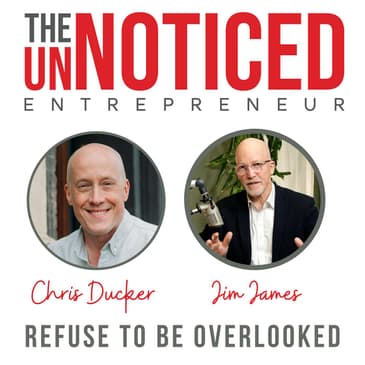
The Long Haul Leader: Navigating Business, Burnout, and Legacy with Chris Ducker
Discover practical insights from Chris Ducker, a seasoned entrepreneur, on balancing work and life, avoiding burnout, and creating a meaningful legacy. In this episode, Chris shares his personal journey of recovery, the importance of authenticity, and how to build a lasting impact beyond business success. Main topics covered:
- The significance of putting family, health, and personal well-being first
- How AI can support productivity without compromising authenticity
- Building community through consistency, generosity, and genuine connection
- Reframing legacy to prioritize family and contribution over fame and money
- The real meaning of sustainability and why hustle is a seasonal effort
- Practical steps to redefine identity post-exit from businesses
- The importance of self-care and longevity in entrepreneurial success
Timestamps:
00:00 - Introducing Chris Ducker: From burnout to long-haul leadership
02:00 - The core principles in "The Long Haul Leader": balance, family, health
04:00 - How AI supports productivity but cannot replace authenticity
06:30 - Building community through consistency and serving first
09:00 - The importance of differentiation and being true to oneself
11:30 - Overcoming burnout: Chris’s personal health journey
14:00 - The reality of mental health challenges for entrepreneurs
17:00 - The myth of thriving without work-life balance
20:30 - Identity shifts after business exits and the fear of imposter syndrome
23:00 - Redefining legacy: Moving from fame to family and contribution
26:30 - Practical longevity strategies: biohacking, self-care, and mindset
29:00 - The importance of showing up consistently over time
32:00 - Handling criticism and staying true to your values
34:00 - The future of personal branding in the AI era
37:00 - Demand, market saturation, and maintaining exclusivity
40:00 - Building a sustainable business model and avoiding hustle burnout
43:00 - Chris’s advice for entrepreneurs at different stages of their journey Resources & Links:
Connect with Chris Ducker:
Generate higher quality, higher converting leads
ShareTribe - No Code Marketplace builder
Launch your marketplace in a day without coding. Scale your business to any size.
Buzzsprout - Let's get your podcast launched!
Start for FREE
Disclaimer: This post contains affiliate links. If you make a purchase, I may receive a commission at no extra cost to you.
Subscribe to my free newsletter
https://www.theunnoticedentrepreneur.com/
The UnNoticed Entrepreneur is hosted & produced by Jim James.
Jim James (00:02.544)
my guest today burned out the old fashioned way before we all boarded the AI roller coaster. But having successfully rebuilt his world, he's created a practical framework for recovery and growth that I've read, I've enjoyed. And so I've asked him to come and talk us through it today because I know that this will be helpful to you. Welcome to Chris Ducker, serial entrepreneur and author of The Long Haul Leader. Chris, welcome.
@ChrisDucker (00:27.374)
Thanks for having me. Appreciate it.
Jim James (00:29.104)
Well, it's wonderful to have you on the show because I've followed your work with Youpreneur of course, and see you reincarnating now with your book and authoring support and loved the "Long Haul Leader" But let's start with the elephant in the room, Is AI creating a solution or giving us all a greater risk of burnout because it's always on and it's setting the pace. That's the danger. We're all on the roller coaster. What's your view on AI?
the risk gets crazy for entrepreneurs.
@ChrisDucker (01:01.102)
I think I think overall we should be looking at it from a positive perspective. I think that's what we should be doing. I think a lot of people are probably still quite confused about how to utilize it in their business, in the best way. I know that I was a little late to the party in terms of wanting to understand AI better and wanting to
I guess appreciate how it can help us run, support, grow, scale what we're doing. but once I was on board, you know, I was on board. But we were talking just before we hit record here, you know, I don't use AI tools like ChatGPT or Claude, you know, on a daily basis. Of course I use them. They're installed on my computer and, you know, I can see the little Claude logo on my task bar here or or my nav bar on my Mac.
But I I I you know, I'm not like a lot of people that are using it every single day. I'm I'm not doing that. However, I've given my team, or albeit a sport team, only four full time employees now. since selling a couple of businesses, I've been able to size down that payroll quite quite substantially. god, so good. I you know, I I enjoyed being an employer. I enjoyed being a quote unquote boss. but that era has gone now.
Jim James (02:11.76)
Yeah, that must be nice to not have to worry about that every month. Yeah.
@ChrisDucker (02:24.376)
And you know, when you've got up to almost 500 employees, I think we had about 480 odd people at one point, you know, and to go from that to just a handful of employees is fantastic. And so I have I, you know, ultimately given them free reign to be able to utilize AI for any purpose in terms of being proactive, productive, et cetera, et cetera. but I have made it very clear that the output
Of the content very specifically that we produce. So we're talking about our weekly newsletter, expert to authority. we're talking about, you know, anything that you might see on social media. We're talking about any kind of scripts that I might write in regards to solo podcast sessions and things like that, which I don't do very often. But if I've got a point that I really want to, you know, slam home, I'll I will script it in some capacity. All that stuff has to come from me. It has to.
Because it's my personal brand. That doesn't mean that we're not utilizing AI to be able to ideate certain ideas and particularly series of of posts and things like that. We did a six part podcast series on how to write, launch, market, sell, and make money from a business book, which we published all at once for people to binge listen on the Upiner podcast feed. And it went
Off like gangbusters. People absolutely loved it. So that was ideated using AI no idea what platform the team used to do it, but it came to me in terms of sort of different sections, different bullet points, and different ideas. I went then ahead and decided to, you know, elaborate on certain things and dive deeper on certain things, or even completely omit certain subjects and topics as well. So I think overall.
Is it here to help us? Yes. Is it here for us to become more productive? Absolutely. Is it something that the average small business ownerslash entrepreneur should be over concerning themselves with? No, I don't think so. will it contribute to burnout? I think it's like any other system tool or process. it has the ability to get out of control, but
@ChrisDucker (04:36.258)
We're the ones that are still in control. That's a beautiful that's why it's our business.
Jim James (04:40.912)
You know, I think that's a really refreshing perspective, but it'd be interesting to hear your view because, you know, we used to have this issue about printing presses and about tractors and all, all mechanization and the internet and so on was all, I wouldn't use it myself, but it sounds as though Chris, you're in a position where you can delegate to people who then gain superpowers by using AI, but you're, retaining the authenticity and the guidance of your own personal brand.
@ChrisDucker (05:08.844)
Yeah, exactly. And that that's, you know, it's called personal brand. It's not called AI generated brand. You know what I mean? So, you know, I I just feel that particularly as a as a personal brand entrepreneur, that if you are creating content and publishing that to be able to build that brand to attract that that avatar that you're wanting to serve, it's gotta be you. It's gotta come from you. It can't it can't come from a computer or or a program. It's it's the very core of it.
has to come from you. Like I said, you can utilize it to I ideate and get things out of your head a lot faster. That's fine. But ultimately you've got to get it out there and and doing it on your own back.
Jim James (05:47.963)
Yeah, and in some school of thought, really, that the last defense against AI will be being human, know, ironically enough, right, that actually it will be your human element that that differentiates you from from the competition and the big companies.
@ChrisDucker (05:55.31)
Yeah.
@ChrisDucker (06:01.048)
Well yeah. And you know, like my good friend Sally Hogshead, who's an incredible New York Times bestselling author and speaker, she said many, many years ago, you know, being being different is better than being better. And so, you know, I always attribute that to her. It's one of my favorite things to say. And I say it in my books and on stage and all, but I always attribute it to her. and I I I do feel that that is still one hundred percent legitimately true.
You know, being being different is much better than being better when you wanna stand out and find the right people to work with, to sell your products, services, experiences, whatever it is. I think it's incredibly important that we don't lose track of that, you know?
Jim James (06:44.706)
Chris, one of the things that struck me listening to your podcast, reading the book and looking at the reviews, you've got Amy Portfield, you've got Sally Hogshead, who I've just also heard the other day too about, better to be different. And that's a differentiator and a source of competitive advantage long term to be yourself. You've managed over the years to build an amazing community of thought leaders who are both supporting you and that you support
Jim James (07:14.842)
What's been the secret to that success? How have you built that? Because that's obviously a core part of your personal brand, who you know, how you're known. How have you built that? Because that's really an impressive accomplishment there.
@ChrisDucker (07:31.299)
Built it slowly. And I think that's the key. the issue nowadays is that everybody wants things just like that. You know, I had a conversation with my kids. we were watching some art drawing video on YouTube the other day, and we were about 15 minutes through this little demonstration that this person was doing. We were drawing a deer. and we all had our pens out and our and you we were all drawing.
And then an advert popped up and it was like a twenty second advert on YouTube. And my little eight year old turned around, she goes, I hate commercials. I hate adverts. You know, I was just like, You have no idea what it was like growing up. In in the seventies and eighties, you've got no idea what it was like, you know. You had to wait until Friday evening.
Jim James (08:15.866)
Yeah.
@ChrisDucker (08:23.822)
Right. I think it was BBC Two, I think, where Spider Man was on at 7 PM or whatever it was, you know, the A team on Sunday afternoon, you know. You you needed to wait for these things. You didn't have them on demand, right? So I think that I think a lot of people, you know, particularly the younger generation of entrepreneurs, they expect things to happen immediately. They expect to, you know, well, I've been posting on Instagram for three weeks now, three times a week, and you know, I've only got twelve new followers. I'm like, well.
Jim James (08:24.293)
it
Yeah, yeah. Or watch Blue Peter. Yeah, yeah.
Jim James (08:34.033)
Yeah.
@ChrisDucker (08:51.202)
Be happy. That's 12 people. If you had all those people around for a barbecue, your back garden would probably be full. You know. So I I think that we've we've got to we've got to understand that when it comes to community building specifically, you know, this is not going to be something that happens overnight. People's attention spans are the lowest they've ever been. and also, regardless of what niche you're serving, you are in a competitive niche now. The competitiveness of business has never been as high.
Jim James (08:56.506)
Yeah. Yeah.
@ChrisDucker (09:19.51)
as it has today, because the barrier to entry is as low as it's ever been as well. So I think that you know, I I truly believe that the reason why I've been somewhat successful in building communities over the years, and there's much bigger communities out there than ours at that at Upanot at my personal brand, is that, you know, we've shown up in an authentic way. We've shown up consistently. We've shown up with serving first and selling
later, as a philosophy. And we've, you know, we've been around for a pretty long time, Jim. I think that's the thing is like we've we're about to celebrate eleven years at Youpreneur in September this year. So you can look back on that. You can look back at when we used to run large events at the Queen Elizabeth Center in London. You know, you can look back at the you know the tropical think tank events that we ran in the Philippines, you know, in
Jim James (09:55.952)
Yeah.
@ChrisDucker (10:15.566)
two thousand seventeen, eighteen, et cetera, et cetera, et cetera. You can look back on all those things, and understand that, you know, we've been around for a while and and if the community is still hanging around, there's gotta be good reasons for that, right?
Jim James (10:24.55)
Yeah.
Jim James (10:30.268)
Yeah, and I think that you've touched on a few things I've noticed about what you're doing is one is the generosity, what you share, but also the consistency of quality, Chris, you which is also impressive, you know, having run my own businesses for 25 years, to maintain consistency and focus for that length of time is really impressive. And as a testament to your endurance, and maybe this is also bringing us a little bit onto the book topic, which is, you know,
@ChrisDucker (10:37.134)
Appreciate
Jim James (10:58.684)
Most of us, think, at some stages, entrepreneurs suffer some form of burnout, especially those of us that start early. You went to the Philippines when you were quite young, think. You went out there for work. I went to Singapore in 1995 as a 27-year-old and started a business.
@ChrisDucker (11:14.616)
So I was twenty seven when I went to the Philippines, you know, i in two thousand. So yeah. Yeah. A couple of years on me, Jim, but you're looking good for it. I'll give you that. You're looking good
Jim James (11:19.782)
but I'm not getting the deep massages and stuff that you're getting. I've read the book and I'm gonna go down your path of blue lights and all these things. Chris, in his book, Long-Hall Leader, has got an amazing sort of recipe and framework, part of which is self-care, and we can go into that. So Chris, let's move on to this book and the Long-Haul Leader because,
you've managed to do, which is really impressive, is to maintain this quality and this generosity, but also then to reinvent yourself. And I think that's really, really impressive. With this book, The Long-Hall Leader, do you want to just tell us what's been the genesis of that book and tell us why you've written this book?
@ChrisDucker (12:11.286)
Yeah, so twenty twenty-one, you know, flashback to that we were all in the middle of the pandemic. the first year of the pandemic pandemic 2020, obviously we pretty much like every business on the planet, maybe bar a few, had to pivot quite substantially. at Upina, we are at first a I guess an educational business, right? We help entrepreneurs and particularly personal brand entrepreneurs.
To build their business in a sustainable, profit-driven manner, right? That's what we've always been about. And so we used to do, I would say probably about 80% of that would be done in person at live events, both here in the UK as well as in the US, and even as far as Australia, where I'd run smaller mastermind events and things like that, when I was traveling for speaking engagements, I'd always kind of, you know, add on an extra two or three days to do these smaller events for our community around the world.
And so I think the big thing here is understanding that if you show up in the right manner for long enough, people will appreciate where that heart centered focus comes from. and that's what I did. In 2020, we pivoted, we went all in on going online. we grew our business 5x in that year, 2020, because we could open up.
everything we were doing to an international, not that we were never not international, but I mean like serving people internationally online. And so, you know, at the program at the time was the Youpreneur Incubator, which was a one year program. And, you know, there were live there were rather online calls and then there was a big portal of training and all that sort of stuff on there. And we went from about 90 members at the beginning of 2020.
Jim James (13:41.756)
Yeah.
@ChrisDucker (14:08.312)
To about 380 members at the beginning of 2021. So it just it ballooned, it went mad. and then middle of twenty twenty one, we have our sabbatical every August as a family. And we went away. And I realized going into that sabbatical, thinking to myself, man, I really need this one. Like I'm exhausted. Like I feel really tired, mentally, physically knackered, you know? And and we we
We came back from that at the end of August and I remember walking into this very office at the beginning of September, sitting down, turning on the computer for the first time in a month, and staring at the screen for about, I don't know, ten, fifteen minutes or something, turning it off, walking back out through the doors behind me, and I didn't come back in for another three weeks. There was something wrong, there was something up because I always have a pep in my step when it comes to work. I loved this is the really ironic thing.
Jim James (14:58.17)
Yeah.
@ChrisDucker (15:05.73)
I was loving the work we were doing. So I wasn't not enjoying my work. And I think that's a key thing to point out here. Because a lot of people think, burnout, probably hate the work you do. You're showing up for the wrong reasons. Yada, yada, yada. No. I was showing up for the right reasons. I was loving everything I was doing from a work perspective. but I was just doing it way, way, way too much, plain and simple. And so,
Jim James (15:30.428)
Hmm.
@ChrisDucker (15:33.293)
I went to the doctor, I had some blood work done. I actually went in and spoke with a mental health expert as well because I was feeling kind of anxiety-driven quite a bit. and it ended up with me being diagnosed with acute anxiety, depression, and put on antidepression medication initially. and then the big one was phase three adrenal failure, which is a clinical term.
For burnout fundamentally. So your adrenals create cortisol, which is your stress hormone. And when you stop creating that, when your adrenals go into phase one, phase two, and then eventually phase three failure, you don't have any stress hormone. Therefore, you can't handle stress, therefore you burn out even further. And that was basically what had happened. and so I was on the I was on the antidepressants for about a year, slowly took myself off those.
Jim James (16:04.646)
Well.
@ChrisDucker (16:32.288)
started therapy for anxiety and just talk therapy, nothing sort of intense or anything, just talking through feelings and all that kind of stuff, which I never thought I would, you know, have a therapist in any way, shape, or form. No, a lot of my American friends do. and, you know, fair play to them. They it's a big thing in America. I'm gonna talk to my therapist about this. but I think it really taught me that even if you're really enjoying what you're doing, if you're doing too much of it.
for too long, which I certainly had been, burnout's inevitable. It's not a matter of if, it's just when. and I think a lot of entrepreneurs are in that spot, you know, they're in that position.
Jim James (17:12.582)
You know, Chris, I think it's really, really important there a couple of things that you said. No, one is that you can be enjoying what you're doing and still burn out. As you say, the assumption that you burn out because you're forcing yourself to do something that you don't really want to do. But actually I found with my PR firm after a decade and I'd grown it like you and so on. But actually I just also one day just couldn't get out of bed, you know, and you feel this huge sense of anxiety that you're not leading anymore.
@ChrisDucker (17:23.916)
Yeah.
Jim James (17:41.54)
you feel, you know, that you're not going to make the money, you're not going to look after your team, you don't look after the clients. And but you don't really know where to look, right. And
@ChrisDucker (17:44.578)
Yeah. Yeah.
@ChrisDucker (17:50.467)
Yeah, and I yeah, it's it's interesting. I I'm curious to know your thoughts on this as well. I'm gonna turn the mic back on you here, Jim. I I I when I when we s when we exited from our larger business in early or early to mid 2023, and we went from almost five hundred employees to at that point probably about thirty or so, I kinda had for the first time really in my career, I think I
Of had a little bit of imposter syndrome. I was like, well, am I really like, am I this serial entrepreneur anymore? Like, I don't I don't have all these people working for me anymore. I no longer have a you know a medium to large sized business that I'm running. Am I still really the that that serial entrepreneur? And I kind of like had this thing that I need to needed to battle with for a little while. and I spoke with a good friend and mentor of mine over in the United States about it.
And she said to me, of course you are. Like, you know, you've exited successfully from this business that you spent 15 years building. You've still got another two businesses. Like you are a true blue serial entrepreneur. And with her tough love, you know, she kind of slapped me about a little bit and kind of slapped me out of it. and it was in it was really interesting. I never, you know, looking back on that, and I've spoken about this a few times now, like I didn't see that coming at all. Not at all.
You know, and so I'm curious to know with w regardless of size of business, when you when you had your PR agency up and running and and you went through this, how did you feel about this? I'm curious.
Jim James (19:25.712)
Yeah, it's interesting this idea of how we associate ourselves with the company and our identity being in interlinked, right? And, and like you, you know, I started multiple businesses at Singapore PR, then I opened in India and I opened in China. And then in China, we opened the import business for Morgan Sports Cars. So I imported cars to China. And then I started the import business for a drinks company from the UK, you know, and
What one realizes is that we really attach our activity to our identity. I do things, therefore I'm an entrepreneur. And when I'm no longer doing those things, because I sold off those various businesses like you, not as successfully as you have. But then you find yourself saying, well, am I really an entrepreneur? although I've started, I started the British Business Awards in China, we've just run a...
bike event here in Wiltshire that I started, right. So in fact, I was talking to an American friend yesterday. Funny to say that, who I've known since university in Chapel Hill, when I was studied in America. I said, you know, I'm just not sure, Dan, you know, am I an entrepreneur? Because I don't, I don't have a team anymore. said, well, mate, I mean, what, what's the, what's the definition of an entrepreneur? You start things and you build things and then you, you grow them and you pass them on to other people. He said, absolutely. And he's always been a
a corporate guy. So it's very interesting that sense of how we attach our activity to our identity. And it leads me on to an interesting conversation I with a guy called Patrick Woock, who I knew when we were in Beijing together, and he wrote a book called The Generational Success and all about succession planning. And a big part of what he was talking about was how entrepreneurs failed to sell their businesses.
because they don't know what to do next. They don't know how to identify who they are without what they've built. So Chris, thanks for turning the mic back on me, but coming back to you again, you know.
@ChrisDucker (21:32.367)
No, it's but it's interesting. You know, I was curious, you gave me a good answer because I just I don't think we're the only ones that think like that. I think a lot of entrepreneurs think like that when they're presented with an opportunity to either and the word exit, there's so many different versions of that. Like you either sell it or you slowly but surely have yourself bought out, or you shut the business down because you don't want to run it anymore. Like there's so many different ways to look at exiting, right? But I I'm sure there's there's gotta be factors.
Jim James (21:54.246)
That's right.
@ChrisDucker (22:00.111)
Thousands of entrepreneurs right now thinking about this exact same thing of when I'm no longer connected to this thing that I've built, what am I? Who am I seen as? Sort of thing, particularly in this very social media heavy environment where, you know, everything's a bloody highlight reel right now. On so that's why I don't like social media, really. I'd prefer not to have to include it in my business. But as a personal brand entrepreneur, it's kind of goes hand in hand, really, you know.
Jim James (22:10.982)
Yeah.
Jim James (22:28.15)
Well, and Chris, it's very interesting to say that because one of the conversations I've been having as we move into this next stage of life is, you know, am I an entrepreneur or am I a coach? Am I a business consultant? And do you know the David Epstein book called Range? He talks about, you love it, he talks about really how the generalist has such an amazing role in society. But we're so focused now on labeling that, you know,
@ChrisDucker (22:43.212)
No, not heard of it.
Jim James (22:56.706)
I do this for this person in this much time or your money back that what was historically seen as someone in society that was a, you know, a thoughtful person, a strategist, if you like the sort of Plato, Socrates, Cicero, those people that were thinking about subjects were not really valued because people want to get a result in a short amount of time with a fixed amount of price to your earlier point.
@ChrisDucker (23:21.698)
Yeah. Yeah.
Jim James (23:23.856)
Which I think brings us nicely onto a topic in your book, Chris, which is about legacy. Because I thought what you've done really neatly there is to transition from, I'm an entrepreneur to I'm a sort of a citizen. I'm a father. I'm a contributor. Can we just talk about some of what you've built in the framework there in terms of how entrepreneurs and let's face it, men and women in their 50s and 60s exited or not.
how they can redefine who they are, because let's face it, most of us will hopefully live till the 70s, 80s, 90s, maybe have quite a long time to redefine and play an important role in society. Take us through that Chris
@ChrisDucker (24:05.058)
Yeah, I mean to your point, I think that I think, you know, longevity overall is is a is a great thing. And I think that a lot of us are going to live longer than we would have done if we weren't yeah, if if we weren't in this if we weren't in this period of time right now, I believe we will probably live on average about ten years or so longer, hopefully, with a little bit of luck, you know, right now. because of things like and you mentioned sort of some of the biohacking stuff, you know, the
Jim James (24:16.956)
Fingers crossed, yep, yep.
@ChrisDucker (24:34.028)
Red light glasses to promote better and deeper sleep. you know, cold plunges and saunas and, you know, all these other things that I kind of I wouldn't have seen myself doing three, four years ago, but now I'm all over them because if there's anything I can do as a father first and foremost, a husband secondly, and then a leader third, if there's anything I can do to be around longer for all of those reasons,
I'm all in on it. I'm all in on it. You know, I I get not to go off too t to get off topic too much, James, but I have someone come to my home every ninety days to take my blood, to send it off to a lab so that I can see what I'm deficient in so that I can supplement in the right ways for that next ninety days. And I work with a a naturopathic doctor and a dietitian and all that kind of stuff. Like I'm taking this stuff serious. Like I
Jim James (25:31.388)
You are in this serious league. I think again, come back to some of the Americas like John Lee Dumas, they're now talking about, you know, longevity and sustainability, which is kind of a luxury after you've attained wealth, isn't it Chris, to some degree?
@ChrisDucker (25:46.861)
Well, yes, to a certain degree, you are right. But also, there's a lot of things that you can do, even if you haven't attained a certain level of wealth, to be able like you don't need to go out and buy a a three thousand, four thousand dollar coal plunge tank for your garden. Like you can take a cold shower, right? Like, you know, there are you you don't need to buy red light, you know, therapy glasses or or blue light blocking glasses, rather.
to you know at 150 bucks to you know promote better sleep you can just turn off your TV and not look at your phone for an hour before you go to bed. Read a book instead, right? There's a lot of different things. You know, red light therapy is great. You know, UV rays and go out into the garden and and walk around with no t-shirt on for 20 minutes. You know, there's a lot of things we can do that don't cost anything when it comes to that stuff. But to your point, I you know and and and the point of legacy, again not to get off topic too much, like I just
I think what it was, this burnout really taught me that if I didn't look after myself properly and be quite selfish about it, that, you know, I wasn't going to be able to build that level of legacy that I really wanted. And I think as entrepreneurs, we also get a little twisted in our idea of what legacy really is. Like, I want to, you know, build great companies or promote, you know, great charities or, you know,
you know, create products that change people's lives, all these other kind of legacy things. At the very core of it, my legacy is going to be my children. And it's a very simple focus of me to enable my children to be able to be more successful than I have become, be happier than I have become, be healthier than I have become, and so on and so on and so on. And so that's what I'm all about with
with my level of legacy is to be able to leave a lasting impression first and foremost on my kids, right? And then secondary to that, to be a great partner, to be a great spouse to my wife and to love on her as much as I possibly can. and then lastly, as a leader, is to be able to help people affect their own level of change, their own idea of change and servitude in in what it is that they're doing from a business perspective as well.
@ChrisDucker (28:08.45)
You know, there's a really, really good book called Half Time, written by a a gentleman of the name of Bob Buford. And he talks about going from success to significance. And I think that's a really, really cool way of looking at what legacy really is, you know.
Jim James (28:21.615)
Hmm.
Jim James (28:27.031)
Yeah, that's what's interesting as well for me in reading your book and listening to you talk as well as that you've kind of flipped the script because for many people legacy starts with external influence, know, to be famous, to be the first trillion dollar person. you look at Elon Musk, you know, he's got all the money in the world and he's got 12 children, half of whom are trying to estrange themselves from him, you know, and
Just think about how I really enjoyed your book because you've got your personal details, but you've got an intellectual structure. And as an entrepreneur, I also liked that it was practical. But I also really, as it really resonated with your sense that it actually starts, if you like, at home, right? It starts with your children. I've been very blessed to take my girls to school every day on scooters, first of all, in prams and then scooters, and then on the back of the bike.
and then teach them to drive. now they drive themselves to school. Right. And I love that we've been able to play that role, but I thought it was really interesting that you start with your family and then you go external rather than external to internal. Where does that come from Chris? Because it's a little bit counterintuitive because many people think success is about fame, not necessarily about connection. So where does that come from for you?
@ChrisDucker (29:37.08)
Yeah.
@ChrisDucker (29:49.133)
Well, I don't know particularly. I just I feel like it's it's just, you know, honestly, it's just something I've always done, Jim You know, we started my business, you know, with with my wife. She's she's a hundred percent, you know, by my side and supportive. And she runs still now. I mean, even when we we have almost five hundred employees, not everybody got a handful, like she still runs the finances, she still runs the ops of the business.
I'm the face and the marketing and the sales and you know kind of the delivery side of things. My daughter, Chloe, my eldest, you know, she is the COO at UPener now. So she runs things sort of day to day and works with our clients from a an admin and kind of operational sense. If we put on a live event, it's all her. Like everyone's, Chris, your events are amazing. Like I literally show up, strut myself like a peacock on stage for the weekend and then leave. Like my daughter Chloe does.
Jim James (30:38.442)
Yeah
@ChrisDucker (30:43.298)
everything. She does everything else. So so she's twenty seven. She's twenty seven.
Jim James (30:44.41)
Well, and how old is Chloe? Okay. Well, like the magic age, 27, mean, like takes after her dad, Gets in the business at that age.
@ChrisDucker (30:51.95)
Yeah, yeah.
Yeah, yeah. And so, you know, and you know, and then, you know, my my eldest, CJ or Chris Jr., he's 30. You know, he he doesn't work for the company full time, but he will help out with videography. He's an incredible videographer and content creator. He actually works with F1. and then my my second youngest, Charles, he's almost gonna be 18. He is a complete self-taught graphic design and video editing genius. and then my little girl.
Cassie, who's going to be nine in a couple of months from now, you know, she's she's sort of figuring out what she wants to do. One minute she wants to be a vet, the next minute she wants to be an actress. You know, so very, very varied, very varied. Right, right. And she actually she's a very she's a horse girl. She does horse riding every weekend. She absolutely loves it as well. So I I think the other, you know, to your point, like my kids are always around at our live events as well.
Jim James (31:36.54)
Be a pantomime horse then she could be both, you know, she could do.
Dice.
@ChrisDucker (31:52.095)
And in fact, actually last November we ran the second long haul leader summit. we're taking a break from it this year, but we probably will bring it back in 2027. And there was actually a comment, and I've never encountered this, and I've run events from 10 people around the boardroom table right the way up to 500 people in an arena before. there was a comment from somebody about halfway through the first day.
and my little girl Cassie would run up on stage and she would give me cue cards that Chloe had written out to, you know, reminders before lunch and all that kind of stuff. So she'd run up and she'd give me a kiss and then run off backstage and stuff. And this comment came that somebody in the audience had said that they had they they didn't appreciate the fact that there was children running around at a business event. They thought it was unprofessional.
And I just couldn't help myself, Jim. I had to talk about it. I had to talk about it on stage. And I said, like, you know, you know, during the break, somebody had mentioned to a member of staff that, you know, yeah, blah, blah, blah, blah, blah. I said, like, if if that's, you know, if if if that's your thing, like, it's okay. Like, I'm not looking at you from a negative perspective, but you have to understand that this isn't your event. This is my event. I'm the one that's running it and putting it on. and one of my favorite things to do is to show my children.
what I do for a living and to get them involved in a way that they feel like they're part of the team because they are part of the team, you know. funnily enough, this lady was not there on day two. She did not turn up on the second day. And so, you know, you're not for everyone is what I'm getting at here, I think. You know, you can't please all the people all the time. Now I could have avoided talking about that on stage and she probably would have come back on the second day.
Jim James (33:35.025)
Right.
@ChrisDucker (33:49.945)
But that's not me. That's not my personal brand. And when you feel strongly about something, you know, I think it's something that you should stand behind, you know, and get on your soapbox a little bit about it. and I'm glad that I did it. You know, will she ever sp you know spend money or invest money with us in the future? Probably not, but that's okay because there was another ninety-nine people in the room that day that probably will in some capacity, right? So I'm fine with it.
Jim James (34:14.896)
Yeah. And I think that brings us in a way full circle back to what you were saying at the very beginning when we took about AI, that it's still you, right? And one of the messages for people to take away, know, for us to take away from this conversation is, know, AI is not going to, is not going to remove the human, not going to remove us from being mission critical to the company. And I think there's so much sort of anxiety at the moment in the market about AI.
It's really nice to hear you talk with such great confidence about the need to be you and to be different. And that's okay. And it won't appeal to everybody, but that's also okay. And we don't have to try and be, I feel like, homogenous and vanilla flavor. We can be cherry with ice cream and a little bit of something on top. Yeah.
@ChrisDucker (35:03.726)
Absolutely. Yeah. Absolutely you can. You know, and and you know, I talk about it in my second book, Rise of the Upreneur. I talk about this P2P philosophy or people to people philosophy that I've had for, you know, well over 20 years now in business. And that and that is that people will rather do business with people than a logo or a brand. And, you know, I realized this a very long time ago in my career, before I became an entrepreneur, that
You know, I was in the infomercial business for a few years in sales and distribution. And I remember we used to go to Vegas every year for a big, big, big conference. It was a three-day conference, massive, massive conference. And I would be at dinner with some clients. And, you know, I would I was the guy, I was the sales guy who would show up looking back on it now, it's just so good. But I would show up with the purchase order pad to dinner.
Jim James (35:57.373)
You would, right?
@ChrisDucker (35:57.559)
Not to close the deal, not to close the deal, but to be ready if I did close the deal, you know? and and it always got quite interesting reactions. I'd be like, Well, I'm glad that you say that we're gonna go ahead and do this because I've got this piece of paper here and you can, you know, sign up. And they would be like, Wow, like you really thought you were gonna get this business, didn't you? And I'm like, Well, honestly, I thought that you and I got on with each other, and knowing what I do about my business.
Jim James (36:14.224)
Yeah.
@ChrisDucker (36:27.49)
my business and and the industry. If you get on with someone, then you're more likely to do business with them. And I'm also the kind of guys, you know, when I when I get the business, I want to make sure I can action it for you, the client, as quickly as possible. So, you know, signing this off now means I can fax it to my team this evening and it'll already, you know, there's a 30 day, you know, delivery and blah, blah, blah, blah, blah, blah. Right. And so I talk about that a lot. You know, that that instance of
Jim James (36:32.955)
Yeah.
Jim James (36:50.502)
Yeah, yeah, it's.
@ChrisDucker (36:55.928)
being being ready for the conversion that comes from the conversation. When that happens, you should be ready to act on it. But equally understand that people will only really truly do business, particularly today, with people that they really know, love and trust. and it used to be no like and trust.
Jim James (37:15.889)
Yeah.
@ChrisDucker (37:18.488)
But now it's love. Someone has to love you to do business with you, particularly to do it over and over and over again. So that P to P philosophy is something I still stand by very solidly, you know, to this day.
Jim James (37:28.76)
Yeah, and I think you're right, the idea that you'll always be closing. I that was our mantra is always, always be closing, know. Always be closing. Wasn't it like, you call that a watch? You call that a watch? You know, I'm an Omega man myself. I saw you promoting Rolex, but I'm going to go Omega Rolex.
@ChrisDucker (37:33.67)
gosh. Yeah. A B C. A B C Glengarry Glen Ross One of the greatest what one of the greatest movies of all time. So good. On sample part. Yeah. Yeah. Yeah.
@ChrisDucker (37:48.942)
I wish I got paid to promote Rolex. I just wear them, but I wish I got paid to do that. That'd be great.
Jim James (37:54.589)
I'm sure there's someone listening out there who's, Chris Ducker, you know, I wonder whether he can get...
@ChrisDucker (37:59.139)
They they don't need me, Jim. They've they've got a three year wait list for every timepiece on the planet right now. they're im unbelievable at what they do, that can't they?
Jim James (38:05.158)
But more, well, and then there's a whole lesson there about creating demand, isn't there? Just, I do want to ask you, Chris, you know, about demand. You've got now in your book, you say, you know, you only work Monday to Thursdays, right? And you've got your family working for you. What would you say to the person who says, no, Chris, that's all great for you. You've exited at 50 something. I can't do that.
What would you say to that entrepreneur who's listening to our conversation saying, Chris, I'm happy for you. You say you don't need to use AI. You say you can do this. You can do blood work. But that's not my life. What would you say to that person?
@ChrisDucker (38:44.854)
Okay, do you. You know, it wasn't my life for a long time. Simple as that. You know, I I didn't do blood work every quarter until four years ago. you know, I didn't have my I didn't have my ducks in a row, you know, since day one. You know, I wasn't working f you know, six-hour days, four days a week, when I first started. I was doing 16-hour days, seven days a week. You know, you earn your stripes, Jim, I think is what I'm getting at here.
and I'm I am under no illusion in any way whatsoever that, you know, I know that I'm at the point now where I can take my foot off the gas a little bit and I can run things day to day differently to other people. But guess what? I've been doing it 22 years. I've earned the right to do it. You know, I've done the sleepless nights. I've I've you know, I've worried about the bank balances. I've, you know, had people try and screw me over, you know, like I've earned the stripes is what I'm getting at. And everybody has to take their own path.
You know, everybody has to take their own path. So if you see somebody else doing all these things and you think, Well, I I can't do all those things, yes, sure. Do what you need to do right now. But when you are in a position to be able to hit the pause button a minute and step back and look at what it is that you've built and how you've built it, ask yourself the question, how am I going to be able to sustain this? Because as I talk about in the book, hustle is a season.
It's not a lifestyle. You can hustle up. There's nothing wrong with hustle, but it's not sustainable. It's not a longevity plan. And so, you know, if you want to be in business 20, 30, 40 years, that's not a sustainable situation. You've got to be able to figure out what to do. And maybe it comes down to, you know, team building and delegation. Maybe it's coming, maybe it comes down to slowing things down across the board. maybe making a little less money.
but making it for a longer period of time. Like, you know, everybody has their own different goals, right?
Jim James (40:49.946)
Yeah, and think Chris, what's wonderful is a couple of things. One is that you've shown what can be accomplished in spite of burnout to reposition and rebuild. You've demonstrated the potential that it's never too late to come back and it's never too late to redefine and rebuild yourself. But also in your book, there is a genuine framework that people can follow, which I, you know, I personally have found use.
@ChrisDucker (40:57.814)
Mm-hmm. Mm-hmm.
Jim James (41:17.272)
in your book just over the weekend and started to take notes for how I can do things differently. Chris, if people want to find out more about you, obviously, and want to find out about Long Haul Leader book, where can they do that?
@ChrisDucker (41:31.502)
Well, I wouldn't be much of a personal brand entrepreneur if I didn't have Chris Ducker dot com, would I? So that
Jim James (41:36.634)
That's my first piece of advice to my clients is buy your domain name. Right? Yeah.
@ChrisDucker (41:40.131)
Yeah. Yeah. I I've got all my kids as well, by the way. My eldest my eldest actually bought the domain name off me. I I had registered I I think I probably registered it for about fifteen years or something. He eventually bought it off me a few years ago, for the measly sum of just fifty pounds, even though I probably spent ten times that amount looking after it for them. Yeah.
Jim James (41:58.747)
Yeah. Thanks for setting the price. I've bought them for my daughters as well, funnily enough. So now you've given me a good pricing model. Yeah. Yeah.
@ChrisDucker (42:04.418)
Yeah, yeah. I mean, you know, you pr protect it. You know, it is and I've got I've got e even for little Cassie, I've got hers as well. yeah, I you know, it's interesting, isn't it? I I feel that I feel like I'm we're just incredibly blessed to be alive at this time as entrepreneurs. There's so much opportunity out there, but I'm also really, really aware now at this point. I kind of look at where I'm at right now, Jim as like this is my second act.
That's what I'm referring to, you know, the the the theater world of this you've had the intermission, this is the second act kind of thing. I'm just really aware of the fact that success that costs you your your health, your relationships, you know, that sort of thing, it isn't really success at all. It's sacrifice. And so I'm just very aware of that right now. I'm also aware of the fact that, you know, being busy is a bit of a trap. You know, impact should be the real focus. And when
You know, any any idiot can fill up a calendar, I think is what I'm getting at, right? But you shouldn't be you shouldn't be looking at that that motion as a way of momentum. And I think it's important to to focus more on the momentum side of things rather than just saying, I'm so busy, I've got so many things in my calendar. Well, look at those things. You know, a very wise man once said to me, you know, show me your calendar and I'll show you your priorities.
and I always thank Michael Hyatt for asking me that question because he's still a close friend and a mentor as as as we stand here today. But he actually wrote the foreword for the long haul leader as well. So I was very, very blessed for him to be involved with a project too.
Jim James (43:47.228)
Yeah, I saw that as well. Well, I think we've been blessed, Chris, that you've come on the show. Thank you. And I think that, as you said, you've really earned your stripes. I've watched your career and read your content, listened to your podcasts. so, I will appreciate you. And I think really appreciate your honesty and your courage and exposing your vulnerability, but also in creating a framework that helps others to move through their journey. So Chris Tucker, thank you so much for joining me today on the Unnoticed Entrepreneur.
@ChrisDucker (43:51.704)
Thank you.
@ChrisDucker (43:59.439)
Thank you, mate. Appreciate it.
@ChrisDucker (44:15.202)
Thank you. It's a pleasure. Had lots of fun.
Jim James (44:17.154)
It has been a lot of fun. We could, as you can imagine, probably talk for much longer, but we must go. has got clients to see and listen to and help. And I must go off and check out how my children are doing after their exams. Chris Ducker, thanks for joining me.
@ChrisDucker (44:21.351)
yeah.